Get In Touch With Us
Connect with Metals-Tech
Ready to take the first step towards unlocking opportunity realizing goals, and embracing innovation?
-
 CALL ANY TIME
 -
 Follow Us
LinkedIn
-
 Say Hello
info@metals-tech.com
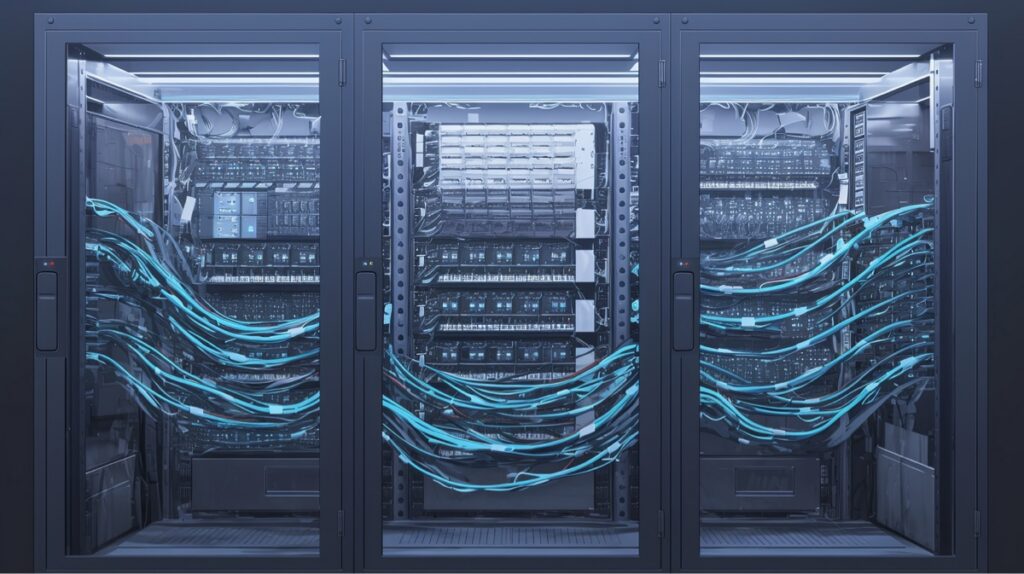
As artificial intelligence, cloud computing and high-performance data processing continue to expand, computing centers are entering a new era of energy density. Server cabinets are carrying higher power loads, chips are generating more concentrated heat, and traditional air-cooling systems are reaching their practical limits. In this new environment, liquid cooling is rapidly becoming a key technology for the sustainable development of advanced computing infrastructure.

Behind every efficient liquid-cooling system lies a critical material foundation: high-end aluminium.
From cold plates and manifold systems to heat exchangers, cooling distribution units, piping components and precision structural parts, aluminium materials are playing an increasingly important role in the thermal management architecture of modern computing centers. Their excellent thermal conductivity, lightweight characteristics, corrosion resistance, processability and recyclability make them highly suitable for large-scale liquid-cooling applications.
For aluminium producers, this market represents a new high-value opportunity. However, liquid-cooling aluminium is not a conventional industrial material. It requires superior dimensional accuracy, clean internal quality, stable surface condition, reliable brazing performance, excellent corrosion resistance and long-term service stability under complex coolant environments. These requirements are driving aluminium production toward higher precision, higher cleanliness and higher process consistency.
Metals-Tech provides intelligent Electrics, Automation and Digital solutions that help aluminium producers build the advanced manufacturing capability required for this emerging thermal management market.
A New Material Demand Driven by Computing Power
The growth of computing power is changing the design logic of data centers. As chips become faster and more densely integrated, heat is no longer a secondary engineering issue. It has become a core factor affecting computing performance, energy efficiency and system reliability.
Liquid cooling offers a more direct and efficient heat transfer route. Compared with air cooling, it can remove heat from high-power chips and server systems more effectively, reduce cooling energy consumption and support higher rack density. This creates a fast-growing demand for aluminium components with precise thermal, mechanical and surface properties.
In these applications, aluminium is not used only as a structural metal. It becomes part of the thermal pathway. Its quality directly influences heat transfer efficiency, sealing reliability, pressure resistance, corrosion durability and the overall operating life of the cooling system.
Therefore, producers of liquid-cooling aluminium materials must control not only thickness and shape, but also microstructure, surface cleanliness, flatness, residual stress, joining performance and compatibility with downstream machining, brazing, forming and assembly processes.
Manufacturing Challenges for Liquid-Cooling Aluminium
High-end aluminium materials for computing-center liquid cooling face a set of demanding production challenges.
First, thermal performance must be stable. Aluminium plates, strips and foils used in cold plates and heat exchangers require consistent material properties across the full coil and from batch to batch. Variations in composition, grain structure or surface condition may affect heat transfer performance and downstream processing quality.
Second, dimensional tolerance is critical. Liquid-cooling components often involve precision machining, brazing, stamping, roll forming or micro-channel design. Any instability in thickness, flatness or residual stress may lead to leakage risk, poor assembly accuracy or reduced cooling efficiency.
Third, surface quality must be carefully controlled. For brazed heat exchangers, cooling plates and sealed flow-channel structures, surface cleanliness and oxide condition have a direct impact on bonding performance. Scratches, stains, embedded particles or rolling defects can create hidden risks during downstream joining and service.
Fourth, corrosion resistance is essential. Liquid-cooling systems operate with water-based or special coolants for long periods. Aluminium materials must maintain reliable resistance to corrosion, erosion and chemical interaction, especially in environments involving high flow velocity, temperature variation and long service cycles.
These requirements place new demands on rolling, annealing, finishing, inspection and digital quality management.
Metals-Tech’s Intelligent Production Solution
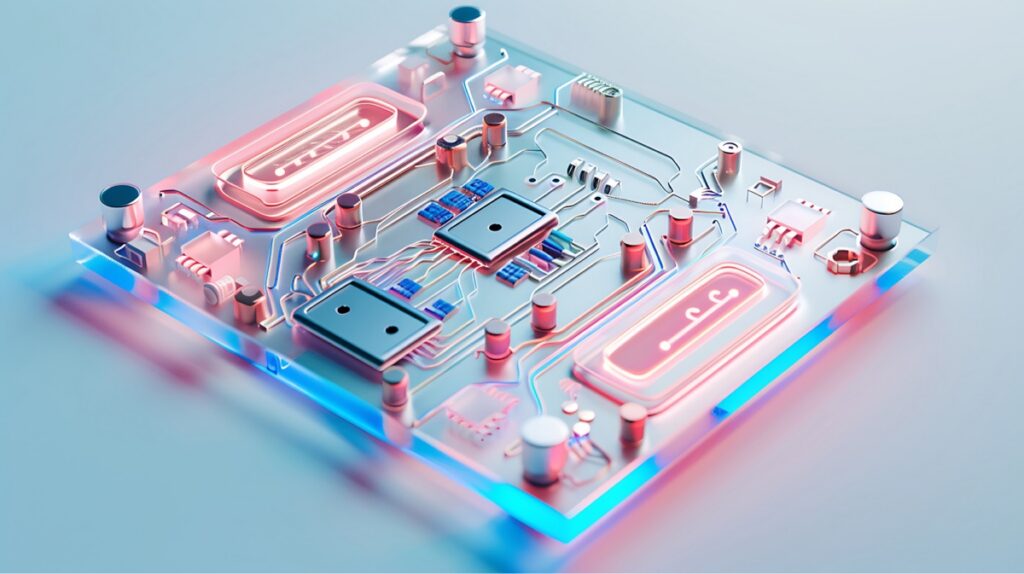
Metals-Tech supports aluminium producers with full-process automation and digital technologies designed for high-precision aluminium production. Our solutions help transform complex production routes into stable, traceable and controllable manufacturing systems.
Precision Rolling for Stable Geometry and Internal Quality
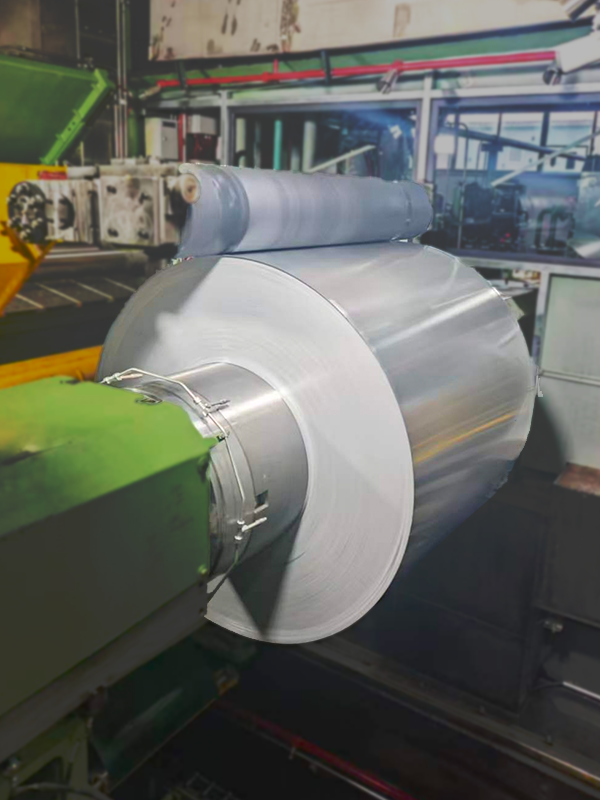
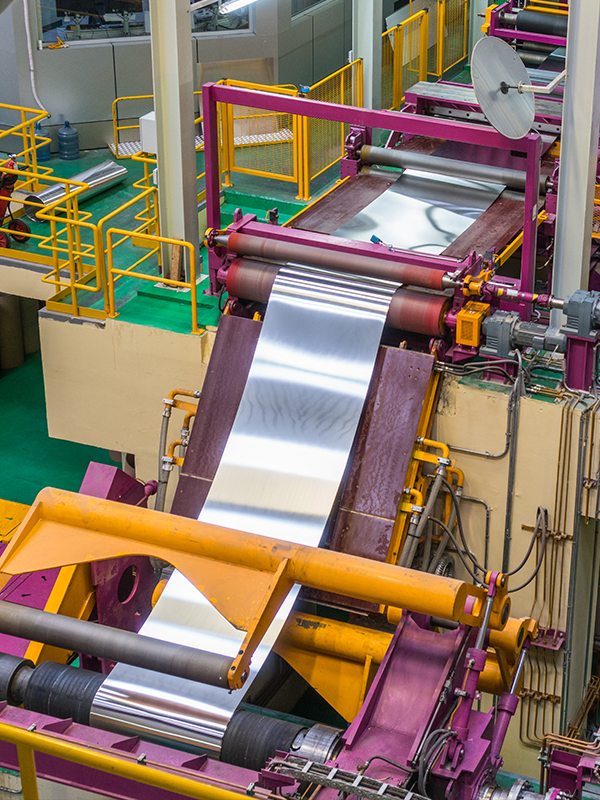
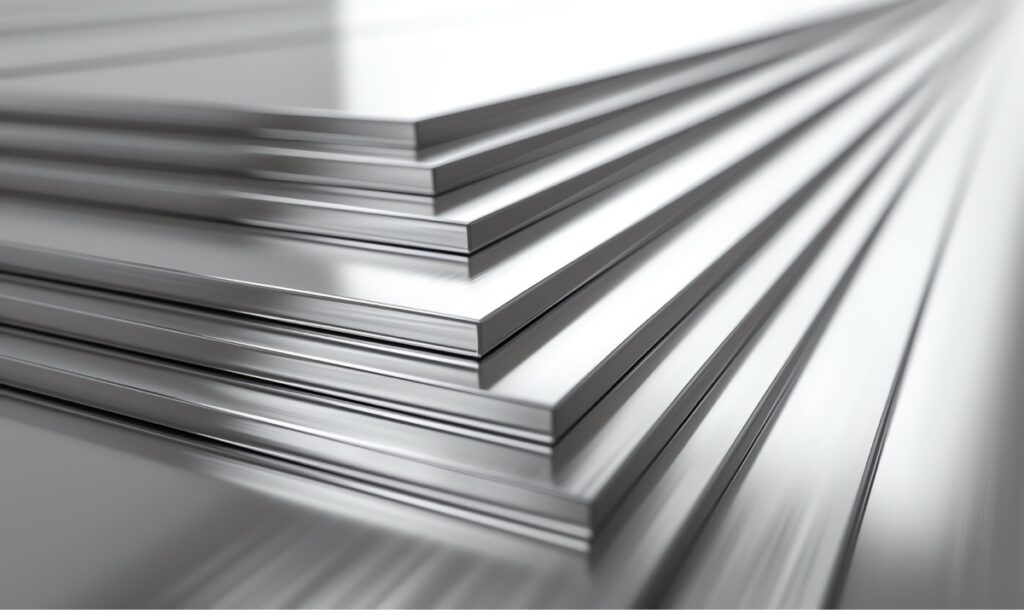
For liquid-cooling applications, rolling stability is the foundation of material performance. Metals-Tech’s automation systems for hot rolling and cold rolling mills provide high-precision control of gauge, profile, flatness, tension, speed and temperature.
In hot rolling, optimized setup models help establish a stable material condition for downstream processing. Rolling force, reduction schedule, temperature evolution and coiling parameters are controlled to support uniform microstructure and predictable mechanical properties.
In cold rolling, high-response gauge control and flatness control enable tight dimensional accuracy across the full strip width and coil length. Adaptive control functions compensate for incoming material variation, rolling speed changes and process disturbances, helping producers achieve stable output for precision plate, strip and foil products.
This level of control is particularly important for cold plates, heat exchanger sheets, brazing materials and precision cooling components, where small deviations in material geometry can affect downstream manufacturing and final product reliability.
Advanced Annealing Control for Property Consistency
Annealing is a key process for determining final material performance. For liquid-cooling aluminium, the target is not only strength or softness, but a balanced combination of formability, residual stress control, dimensional stability and surface readiness for downstream processing.
Metals-Tech’s furnace automation and thermal model systems provide accurate control of heating, soaking and cooling profiles. Product recipes can be managed according to alloy grade, thickness, temper, application and customer specification.
Through precise thermal cycle control, producers can reduce property fluctuation, improve coil consistency and ensure that materials remain stable during machining, forming, brazing and assembly.
Finishing and Inspection for High-Reliability Applications
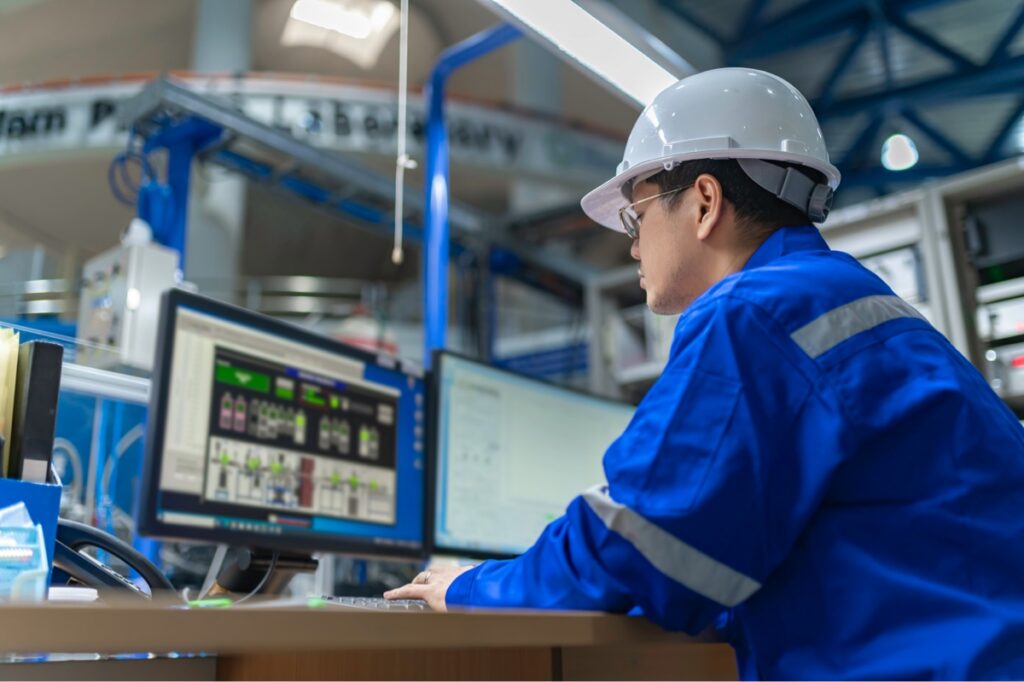
Liquid-cooling components require materials with clean surfaces and reliable edge quality. Metals-Tech’s automation solutions for finishing lines support precise tension control, stable strip tracking, surface protection, coil handling and integrated inspection.
Surface inspection, thickness measurement, flatness feedback and process data can be connected into one quality platform. This allows producers to identify potential defects early, classify material quality accurately and build a complete record for each coil.
For customers in computing-center thermal management, such traceability is increasingly important. A material supplier must be able to prove not only that the final product meets the specification, but also that the process was controlled throughout production.
AI for AI: From Process Data to Thermal Material Confidence
The liquid-cooling supply chain requires high reliability. A failure in cooling components can affect server operation, data-center uptime and system safety. Therefore, aluminium material quality must be supported by transparent and data-based evidence.
Metals-Tech’s digital systems create a complete data chain from production to quality verification. Key process variables such as rolling force, strip speed, temperature, tension, gauge deviation, flatness signal, annealing curve, surface inspection result and coil handling record can be collected and linked to each production order.
This digital record supports quality traceability, customer audits, root-cause analysis and continuous improvement. It also enables producers to establish benchmark process windows for different liquid-cooling applications.
With model-based control and AI-assisted data analysis, production teams can identify process trends, detect abnormal conditions and optimize parameters before defects appear. The result is a more reliable and intelligent manufacturing system capable of supporting high-end thermal management materials.

Enabling a More Energy-Efficient Digital World
The development of AI computing centers is not only a matter of computing capacity. It is also a matter of energy efficiency, thermal reliability and sustainable infrastructure. Liquid cooling helps reduce the energy burden of cooling systems, and high-end aluminium materials help make these systems lighter, more efficient and more scalable.
Metals-Tech’s role is to provide the automation and digital foundation that allows aluminium producers to meet this new demand with confidence.
By combining advanced drive control, Level 1 automation, Level 2 process models, digital quality systems and lifecycle service, Metals-Tech helps producers improve yield, reduce quality variation, shorten product development cycles and deliver materials with higher added value.